We love learning about the grand adventures of our thru-paddlers. We thank Jonah for sharing his story and for providing incredible details of his journey!
Name: Jonah Vitale-Wolff
Age: 45
Location: Grafton, NY
Dates of trip (start and end, plus total number of days): July 2 to Aug. 7 (33 days paddling, 3 zero days, 36 days total)
Overall, what was your experience like paddling the NFCT from end-to-end?
My family and I founded and run a community farm project focused on getting food to those most in need as well as training the next generation of aspiring farmers. While my life has been intricately woven with (re)connecting people to the land, my own connection to the centrality of wilderness as a place of deep reflection, rejuvenation and spiritual connection in my own life, had waned over the years.
The 36 days on the NFCT, 33 of them paddling, three rest days, was my first solo paddle ever. It was a beautiful, blessed, challenging and nourishing journey that was exactly what I needed to foster this reconnection. I’d turn around and do it all over again in a heartbeat.
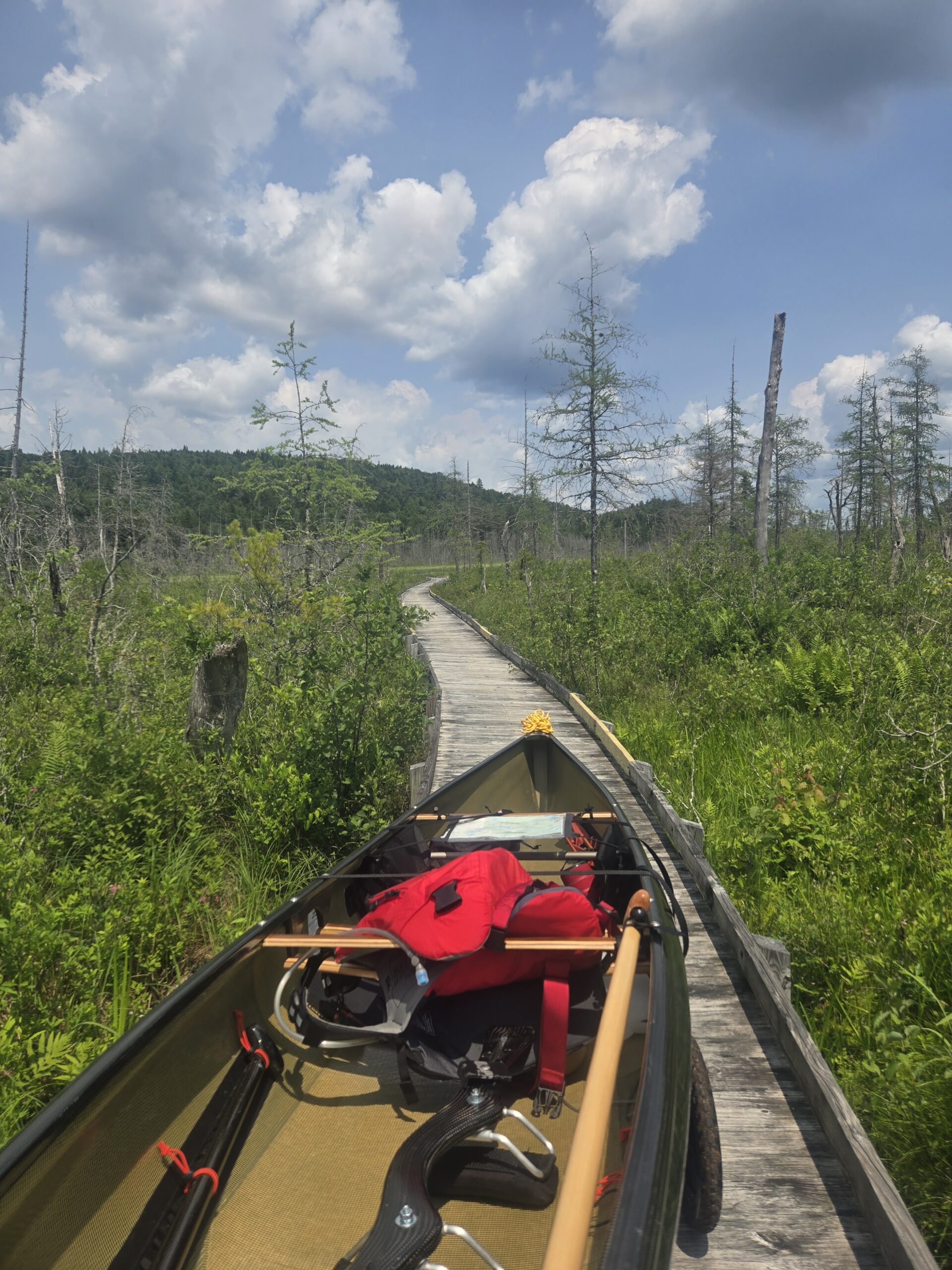
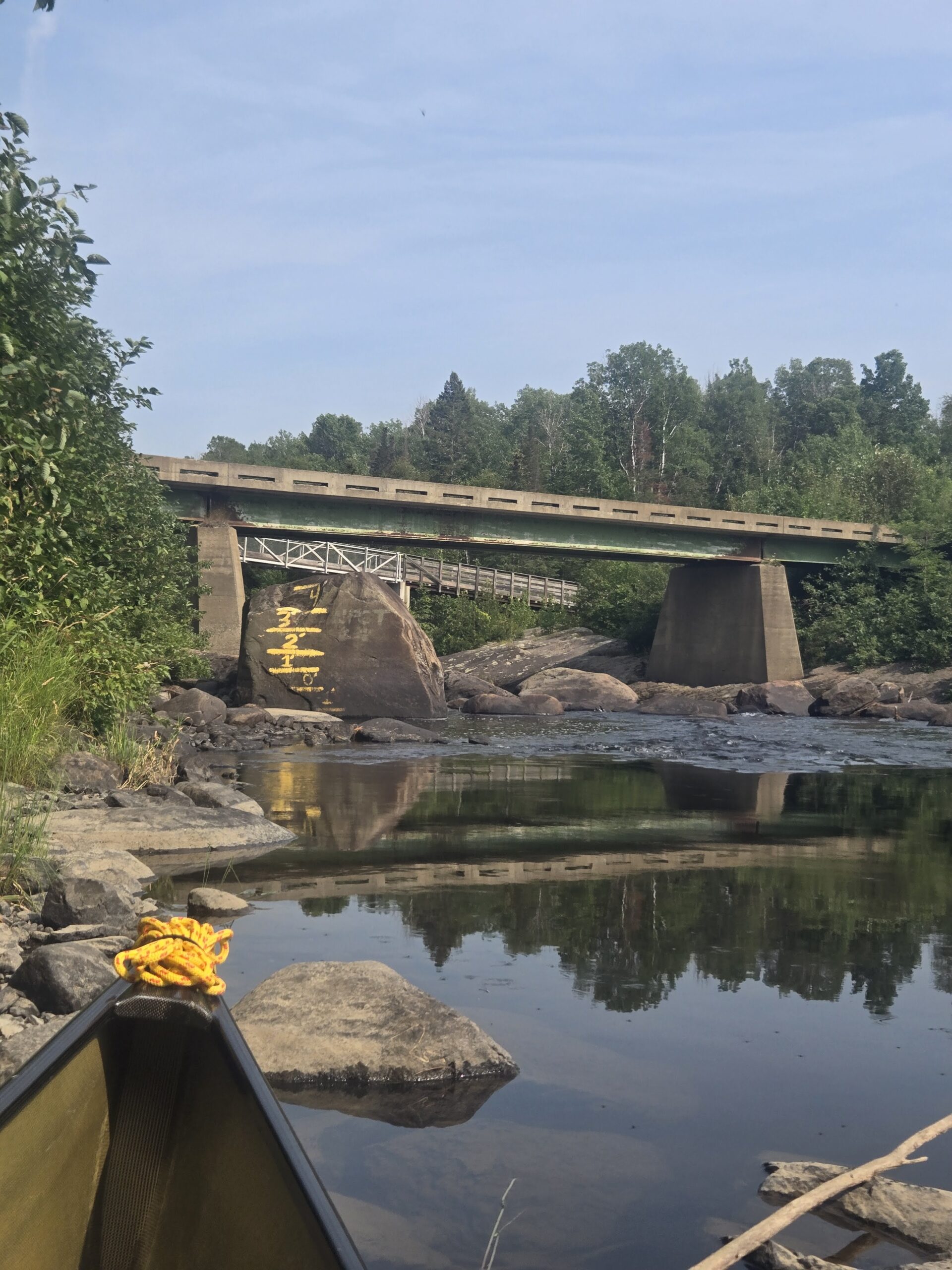
Because of my later timing, water was low in many places throughout the trail. Coupled with dangerous levels of manure pollution in the Missisquoi, I logged close to 200 miles portaging. All part of the adventure.
I was reminded by loved ones that being alone did not mean being by myself. Friends and family cheering me on and supporting me from afar. Ancestors at my back. And the Divine in nature enveloping me. The solo time offered a profound opportunity to deeply listen to what the waters had to teach me. Prior to my trip, a wise friend offered the advice, “Be like water, Jonah.” Day in and out, I had no idea the depth of this adage, becoming hypnotized by the generous, powerful, ancient and patient teachers abounding in the rivers, lakes, rains, ponds, streams and waterfalls. Listening deeply and remembering a relationship with the waters and all the beings and lands she nourishes, older than any of us can remember in memory. But our bodies remind us.
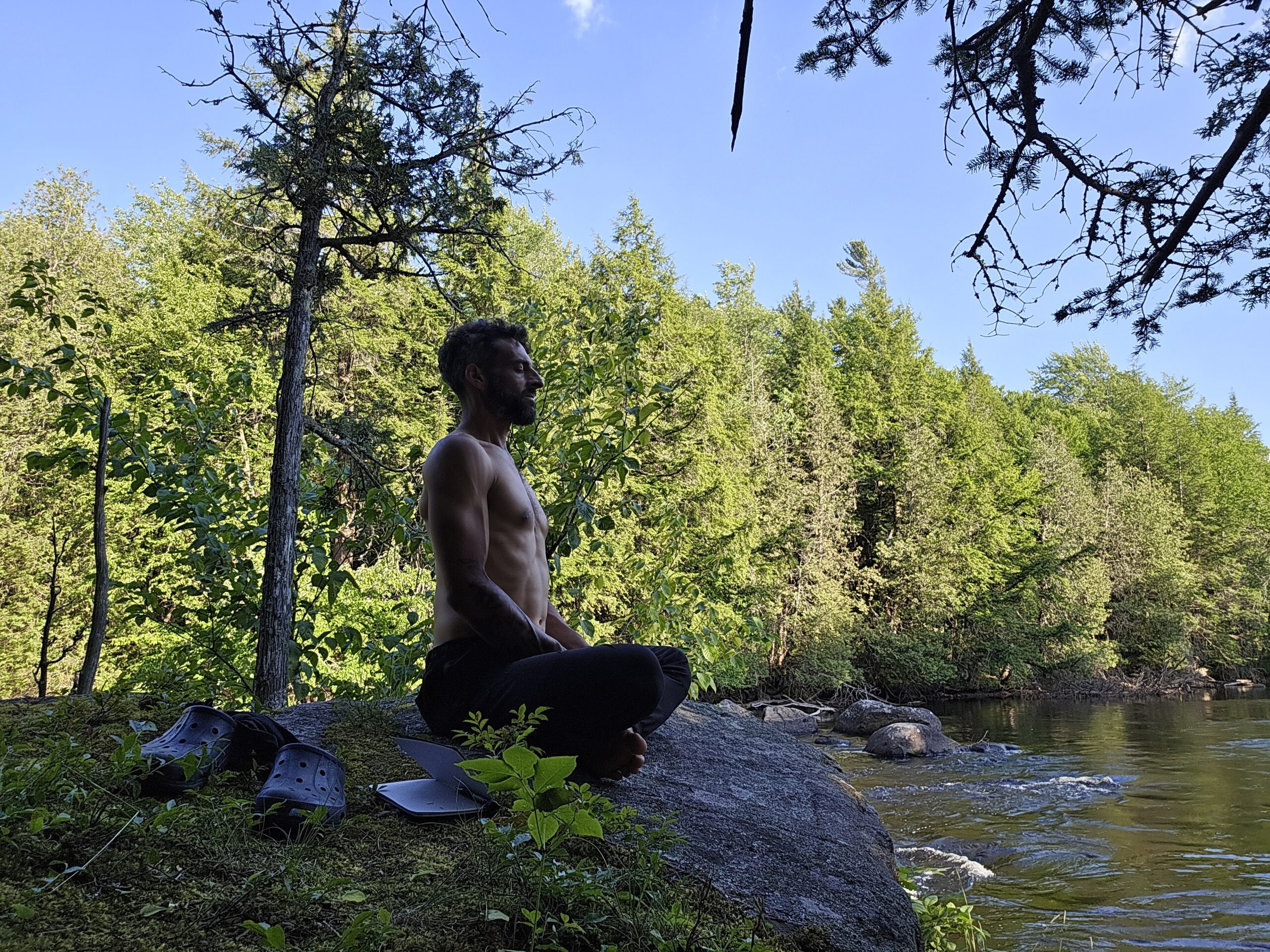
Paddling marathon lengths in a day meant ample time to reflect on life, offer gratitude, be in presence, offer prayers and offerings to the waters and lands, and even chat with aspects of myself, current and past, that needed attention. The NFCT demanded this of me. Any other way, and the thru-paddle may have proven too challenging to complete. This was emotionally tender, while also at the veil of the sacred enveloping me. When this overwhelmed me to tears of joy or abundance, I let it. Other times, I would sing for hours on end. And when called for, sitting silently in meditation at the edge of the rapids, nursing blistered hands and feet, sore shoulders and listening deeply.
What were the best moments for you?
Chase Rapids.
My 22 year old daughter, Neshima, joined me at Chamberlain Lake to paddle the Allagash and St. John Rivers together, and the last section of the NFCT. This meant we would paddle Chase Rapids, me in my lightweight Northstar and her in a robust rental. Each of us solo.
I first paddled whitewater during a class I took earlier in the spring, and had dabbled in it along the previous 600 miles, but with water mostly too low, my experience was minimal. I was nervous for Neshima and for Honey Bee (my canoe).
If the previous month of paddling had prepared me for one thing, it was to surrender and be present. “You prepared. You trained. You can do it.” Neshima patiently listened to my mounting anxiety during the 24 hours prior to Chase Rapids, consistently reassuring me: “You have a repair kit. You can do it. WE can do it.” This was reassurance I needed to say yes. The night before and the morning of paddling towards the dam, I downloaded all I knew about whitewater and boiled it down to the simplest bullet points I could think of. Ones that I hoped Neshima could remember being thrust down the Allagash River towards boulders, waves and holes that could suck her in and/or break our boats.
We were the first to arrive at the rapids. We paid our 10 bucks to the ranger to transport our gear the four miles to the end of the rapids, got a little advice and pep talk, and were on our way.
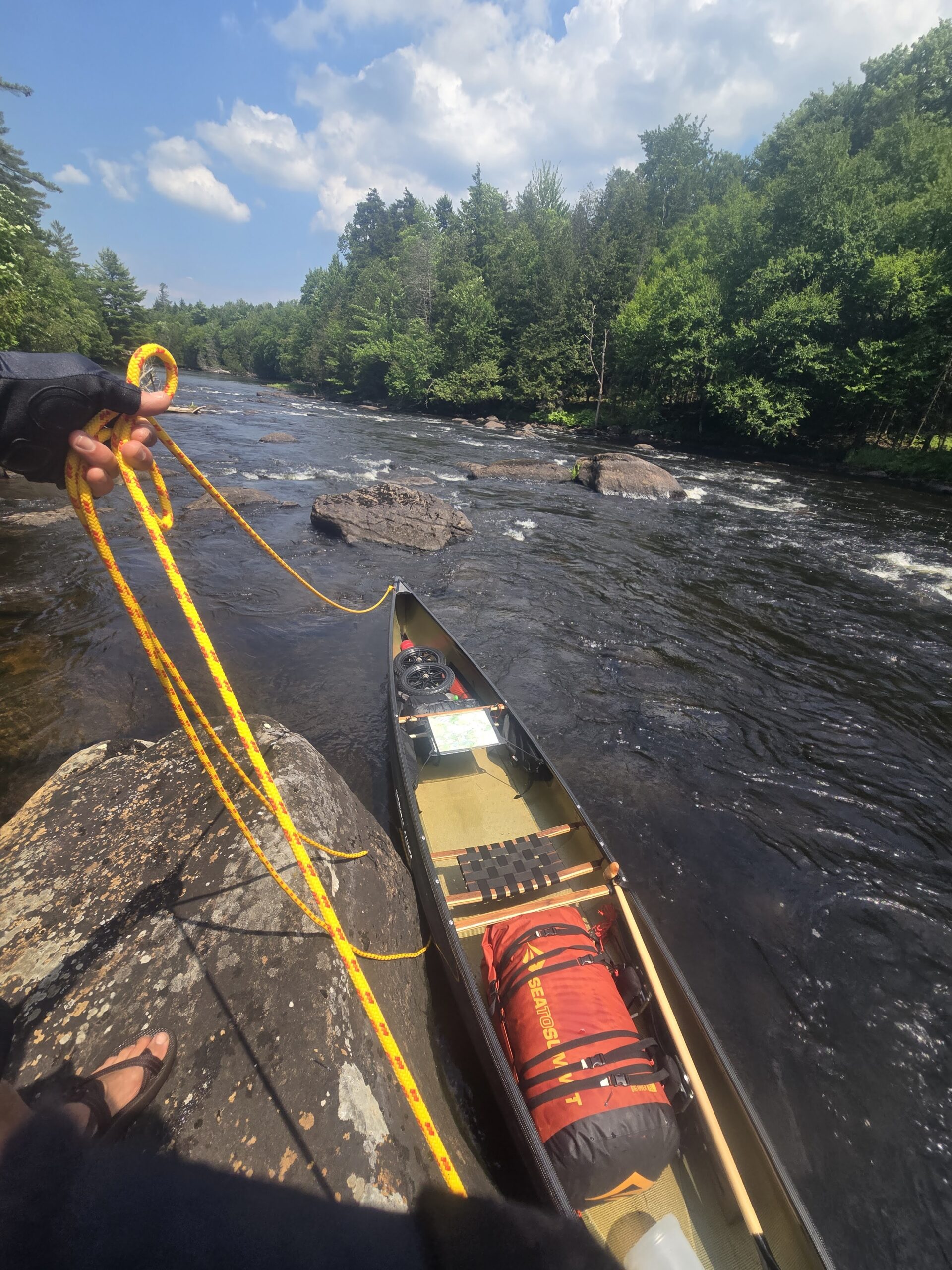
The first rapids are the largest and most technical. We scouted and then jumped right in. Me first, overwhelmed and exhilarated by the size of the rapids. “This is class 2?!?!?” the thought momentarily running through my mind, waves over my shoulders. I did an eddy spin bringing me to rest in our first break spot we had scouted and turned to watch Neshima. Her delighted screams and brilliant smile were audible over the rapids and through the precision of her movements.
We later learned from the ranger that some of those early rapids are closer to class three. Surrender. Be in awe and wonder. The next 4 miles carried on like this, us swapping who went first, each of us releasing fears, and gaining more confidence, with equally growing exuberance, slightly more modest rapids, and a few new scratches on Honey Bee.
Trail magic.
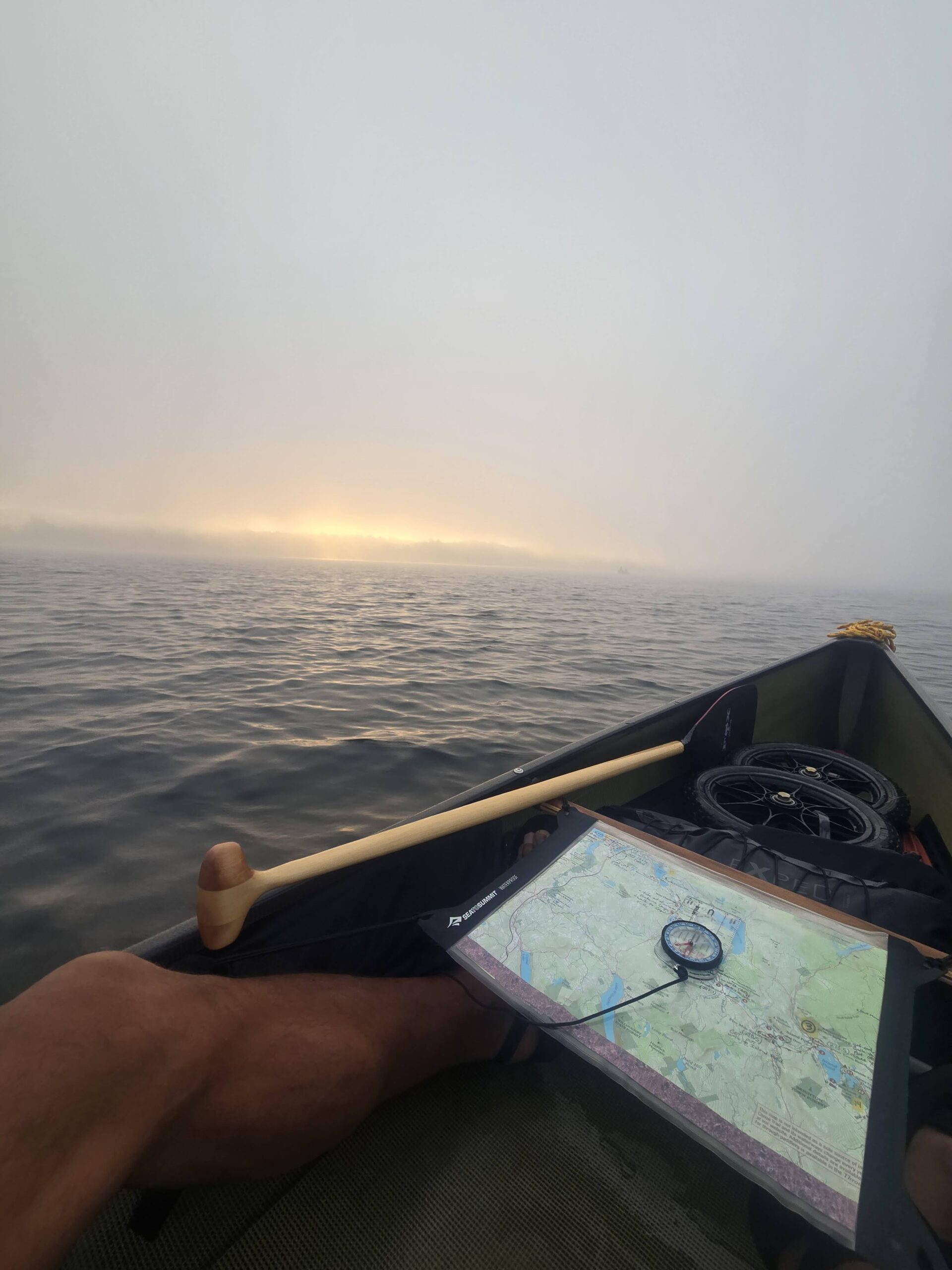
I set out later than usual on Mooselookmeguntuk because of the thick fog limiting visibility to under 20 feet. The morning sun occasionally peeked out and revealed Bald Mountain. By the time I reached Rangeley Lake it was late morning, and while the fog had cleared, the winds picked up to a gentle breeze. As I approached Rangeley I was paddling in strong headwinds and small whitecaps. This felt all too familiar, but I was grateful to have reached my destination before the winds picked up further.
A few days earlier I was expecting a supply drop in Errol, NH. In addition to my awesome homemade dried meals made by a dear chef friend, my favorite cookies and a poem from my spouse, this package had the latter half of the maps for the trip. The package never arrived. We later tracked it to Iowa!?!?!
Needless to say, I needed maps and there was no way to get them in such a remote area in a time crunch. I called all around. Asked everyone I knew including calling the NFCT office. They directed me to the Rangeley Adventure Company who happened to just stocked up on the whole map set and I would be passing through in a few days!
By this time in the trip, walking along roadsides and thru towns was a common occurrence that I only moderately felt like an oddity any more. Certainly less so than walking through the center of Plattsburgh a few weeks earlier. Arriving at the outfitter, a woman stopped me and asked if I was doing “The Trail,” and offered a place for me to stay for the night. “You’ll be walking right by. We have plenty of beds and are in a lovely spot.” This could not have been more of an understatement.
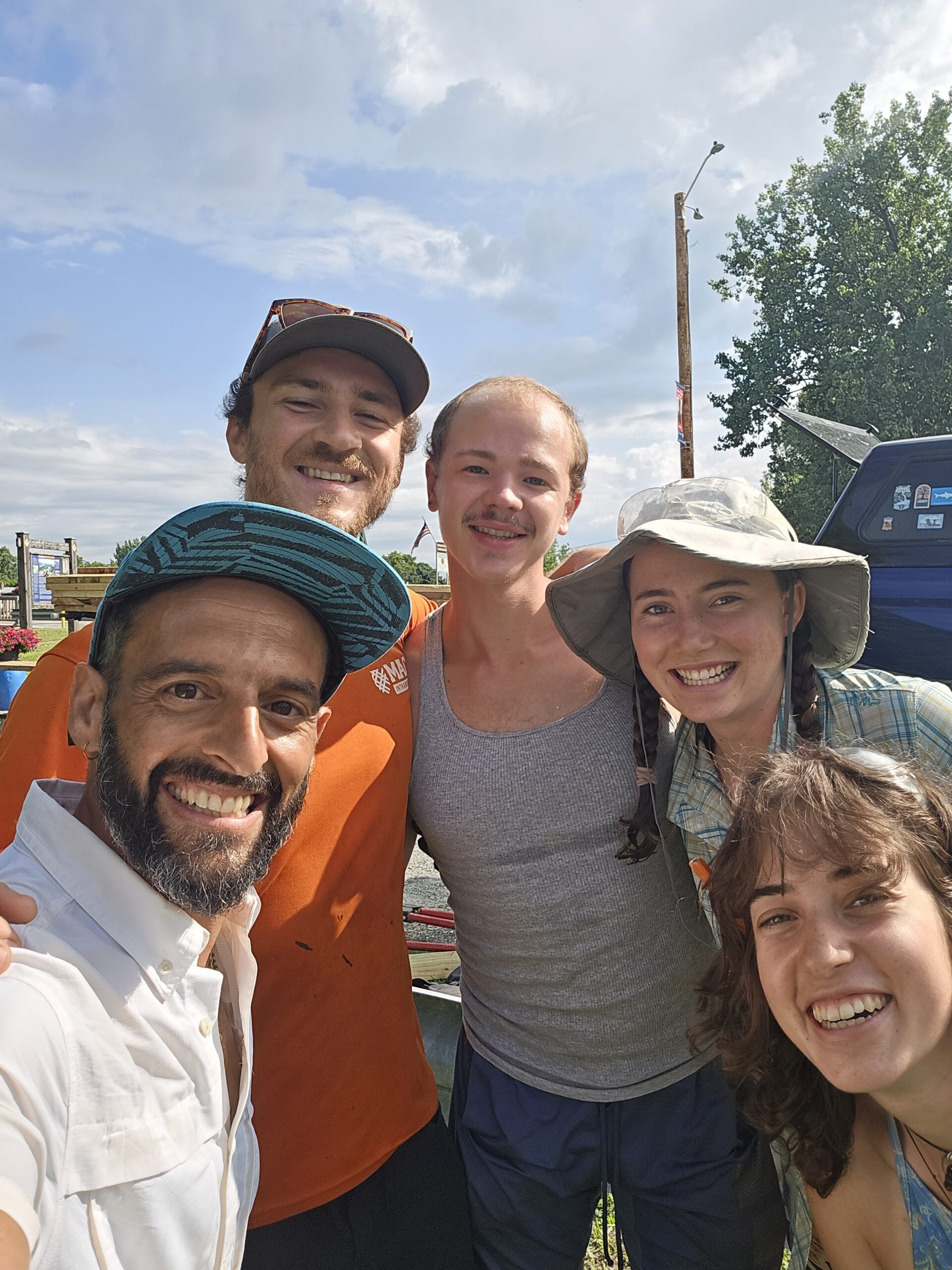
Mary and her husband Paul (70 years old and an aspiring NFCT thru paddler) welcomed me to their beautiful lakeside home on Gull Pond, a renovated camp boathouse for dyslexic children from NY and Boston decades earlier. I had my own room. They fed me and fed me. Grilled salmon steaks. And a leisurely sunset boat ride (motor boat). Mary and Paul extended loving concern to me, familiar in the many Jewish grandmas and aunties in my life. Mary and Paul became my trail Mom and Dad, us sharing text updates throughout the trip. I will forever be inspired by the trail magic along the way, sourced in trust and unconditional generosity. I hope to be able to return this whenever and however I can in my life to those in need.
Lake Champlain.
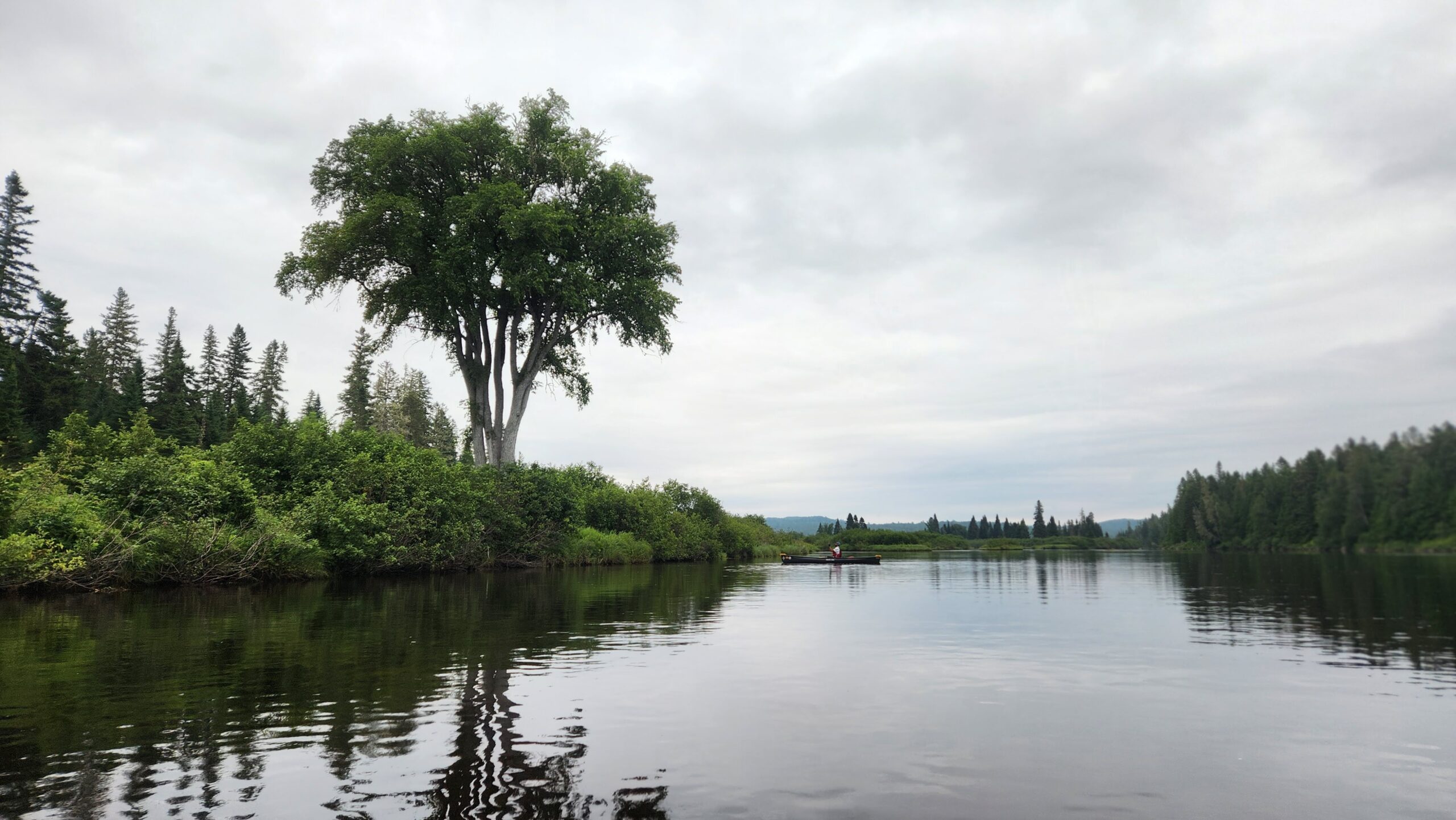
Crossing Lake Champlain looms in the near distance for many thru paddlers as a formidable undertaking of the NFCT. Pitawbagok – The Lake Between. I was no different. Champlain divided my trip into before Champlain and after. It consumed a good chunk of my attention during the first week, and created an anxiety that followed me like a shadow. This was an early reminder and robust opportunity to stay present to this amazing experience, especially having just paddled the glorious Adirondacks.
Countless stories and advice echoed in my head to the tune of, “Do not go if it’s not glassy,” and “Some folks wait days, if not a week for the right conditions,” and “It can change in a moment without notice,” or “Waves can get as big as 7 feet.” It being one of windiest summers on record, everywhere I paddled, even small ponds were choppy with wind. Folks at St. Regis Canoe Outfitters, who have since become friends, suggested, “It’s okay to take a ride around. This is your trip.” Not to mention many of their own hesitation to cross the lake themselves.
After walking the final portion around a bony dry Saranac River through Plattsburgh, I arrived mid afternoon to where the Saranac empties into Cumberland Head Bay. I paddled the 3 miles in moderate headwinds to Cumberland Head Bay state park campground getting acquainted with this sacred lake that demands the respect of all who cross her waters.
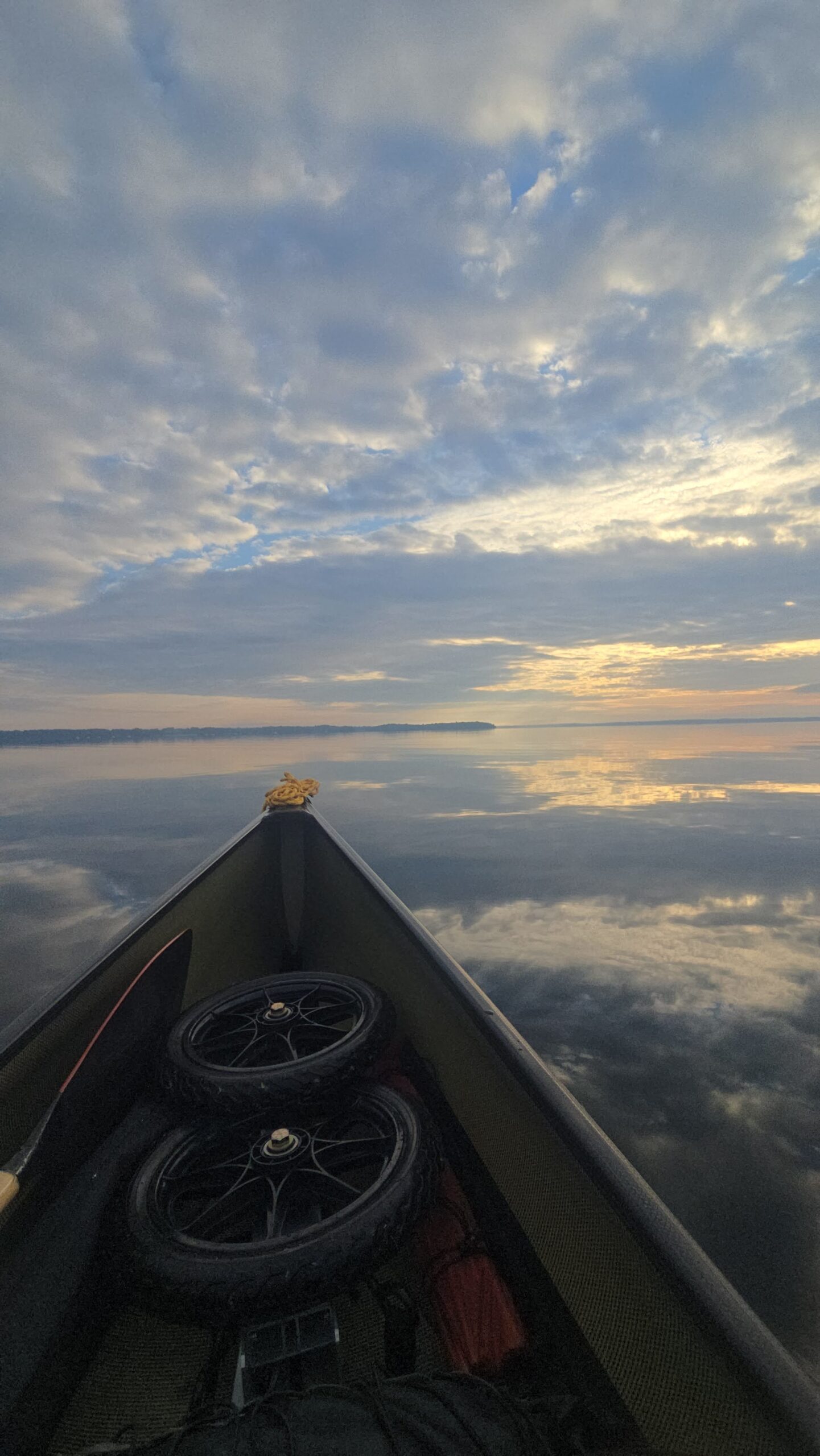
I awoke the next morning to a glassy lake and forecast for the calmest day in weeks (which also proved to be one of the only calm days of my entire trip.) Paddling at sunrise with little wind allowed me to take a more exposed but direct route up the west of Grand Isle, crossing into Vermont at the bridge by North Hero Marina. I had the lake all to myself, not seeing another boat until late morning. Pictures I sent to friends and family left them awestruck, “Are you on a plane? Are you on another planet?” they asked.
By mid afternoon, I honestly would have welcomed a light tailwind, but was entranced with awe and gratitude crossing this sacred body of water, singing my way north. 28 miles later I arrived at Campbells Bay Campground with the rest of the trip ahead, having moved through fear. What once felt like a daunting task, had transformed to deep gratitude and connection to the living waters of this trip.
Engagement.
It is no secret my timing for this trip was not ideal. Such is the life of a farmer and parent. In addition to the low water along much of the trip, this also meant I was on Saranac Lake July 4 and passing through Saranac Village on what I imagined was one of the busiest Sundays of the year. To boot, I accidentally sprayed myself in the eyes with sunscreen. This at first was minor itchy eyes, but progressed to temporary loss of some sight, headaches and allergic reactions. By the time I paddled from my Lower Saranac campsite to Saranac Village I was in rough shape.
I stopped at St Regis Canoe Outfitters to retrieve my first supply drop, see some familiar, encouraging faces, get a few hugs and good advice, and get to the closest campsite I could muster. Five Fauls would be short of my goal for the day, but the five and a half miles was about all I had in me as my body continued to reject the poison.
I tried to enjoy the Saranac as best I could, but all I could think about was, “Please let the campsite be open.” Rounding the last bend before Five Fauls, a bright royal blue canoe rested on the dock. I deflated. I cannot go further. We’ll just have to share. As I approached, a young couple walked the boardwalk towards the dock. We arrived at the same moment. After some friendly chit chat, we determined they were on a day paddle, from Brooklyn, the site was beautiful, and l was going to love it! among other things.
As my exhaustion and relief washed over me, they offered, “We just got engaged!” This brought me to life. “Wow! Mazel Tov! Recently?” They responded, “He just proposed to me on this dock a few minutes ago!” My discomfort fully gave way to delight. “And did you say yes?!?! Does anyone else on the planet know?”
The three of us were the only ones to share this fledgling news. Still sitting in my boat I asked, “Can I give you a blessing?” I drew on the traditions of my ancestors and family to offer them happiness and sanctuary in each other, and to love deeper through leaning into the challenge and wonder of wedding your life with another. “Wow! We just got blessed by a Jewish carpenter guy named Jonah on an epic trip for 40 days and nights!” she exclaimed teary eyed. We didn’t exchange numbers or social media handles. Rather, trusting that moment was how we were meant to meet, and our paths may or may not cross again in the future.
What were the biggest challenges you faced?
Low water.
My later timing meant I would certainly encounter low water throughout the trail. Coupled with an early summer drought, low water defined much of my trip. Many would declare this a challenge. On more than one occasion staying with an outfitter along the route, I heard of paddlers quitting, selling their gear and leaving the trail in frustration. I expected to portage more than the “official” 70 miles, but did not prepare to walk nearly 200 miles of the trail.
Even with severely blistered feet, the real challenge of this was not the walking itself. (I eventually got my running shoes mailed to me which alleviated the blistered feet.) With a background in backpacking and having participated with a dear elder Buddhist teacher on peace walks spanning hundreds of miles, walking long distances, and in atypical settings was not foreign to me. In fact, much of the time while portaging, I walked faster than I paddled, averaging over 4 mph.
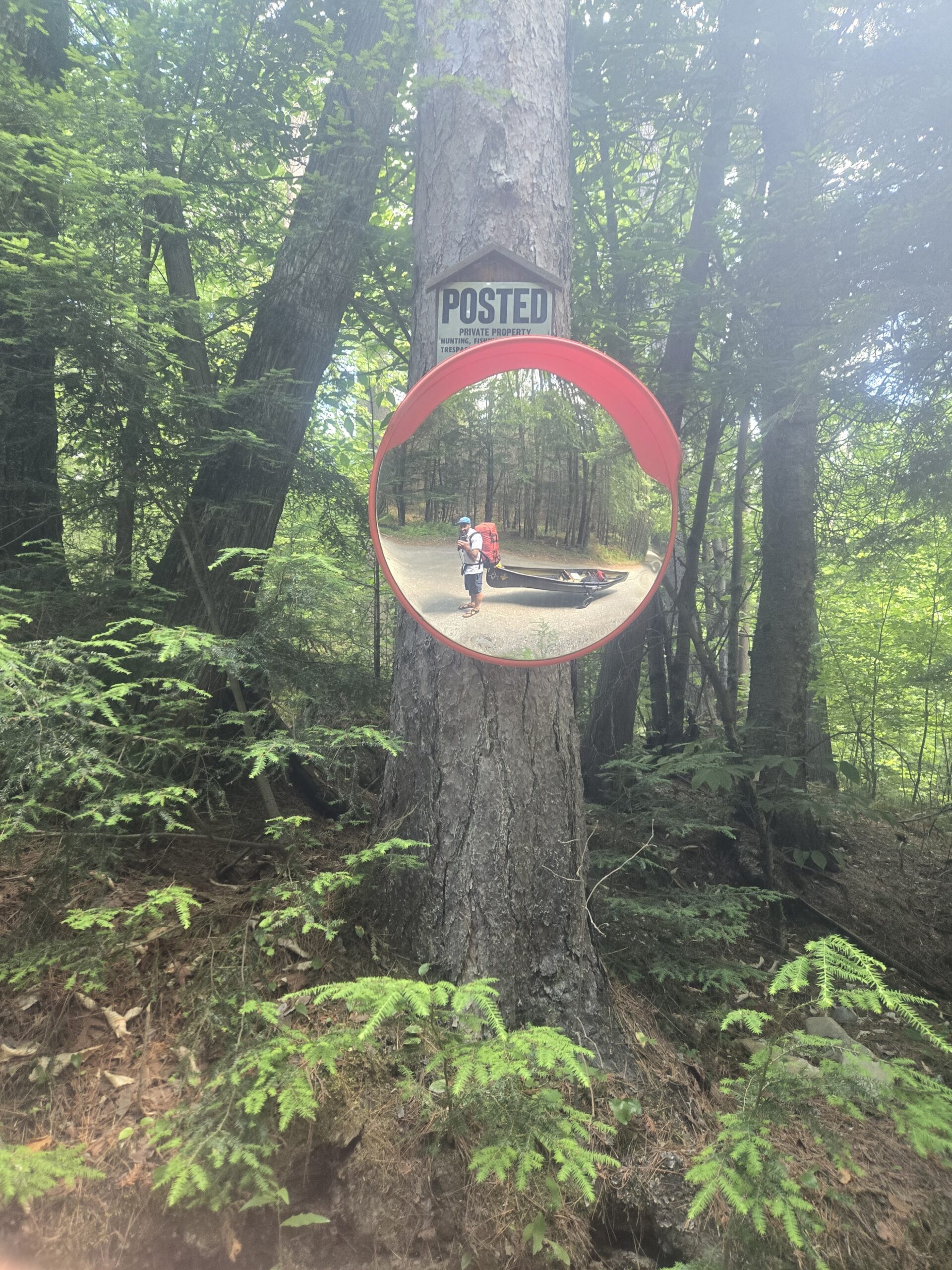
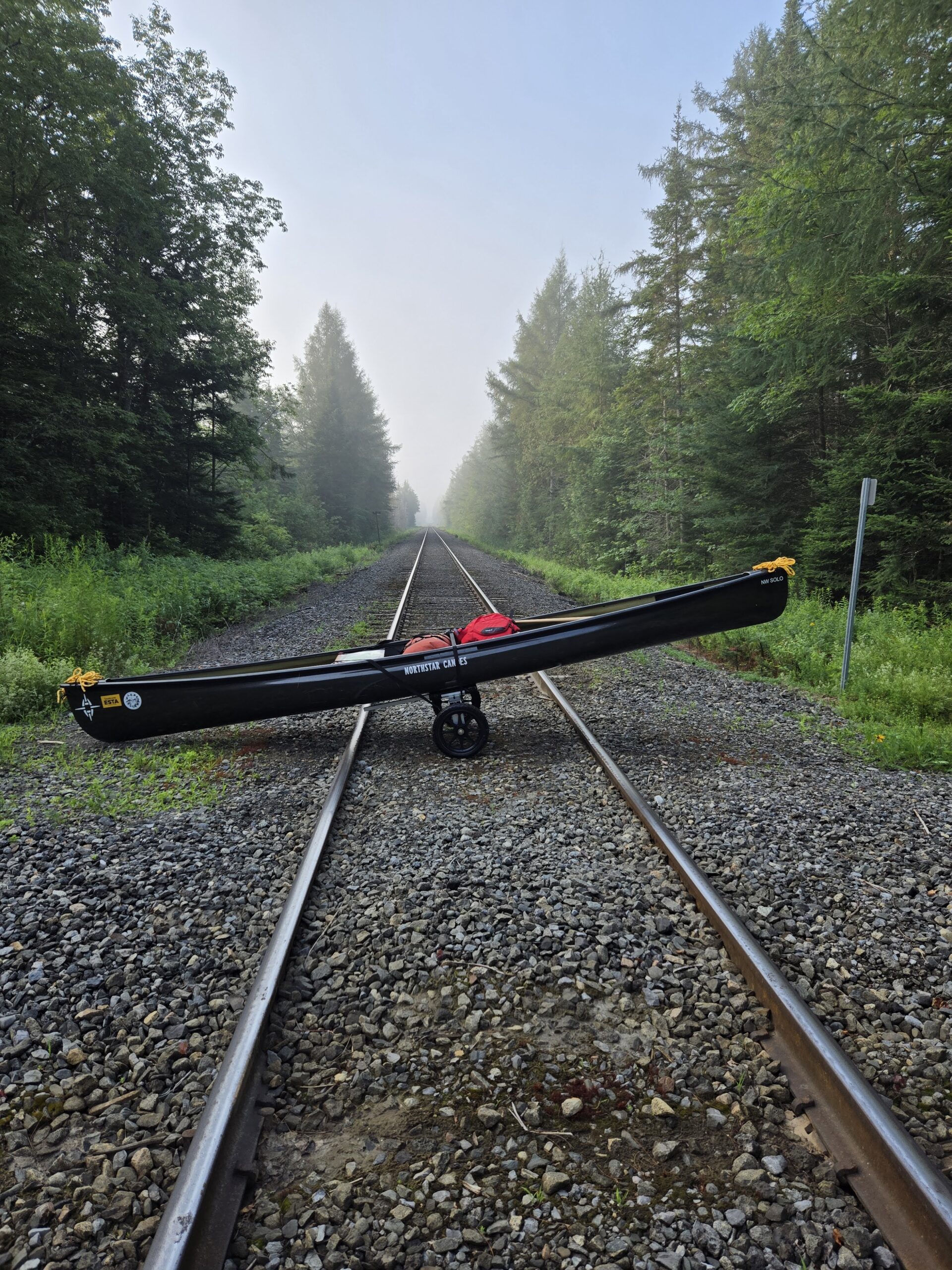
Being a new paddler, the challenge for me was making the decision when to portage and when to paddle. As soon as I left the Adirondacks, much of Saranac River was too low to paddle. However, laving the park means the river is lined with private property and drastically limits the put ins and take outs. It’s not as simple as: I’ll give it a shot when the next take out is many miles ahead on a bony river. By the end of the Saranac River, I found myself walking through downtown Plattsburgh, canoe in tow. “Dont mind me,” I’d announce, “Just your everyday guy pulling a canoe down the sidewalk,” excusing myself in the rush hour of pedestrians.
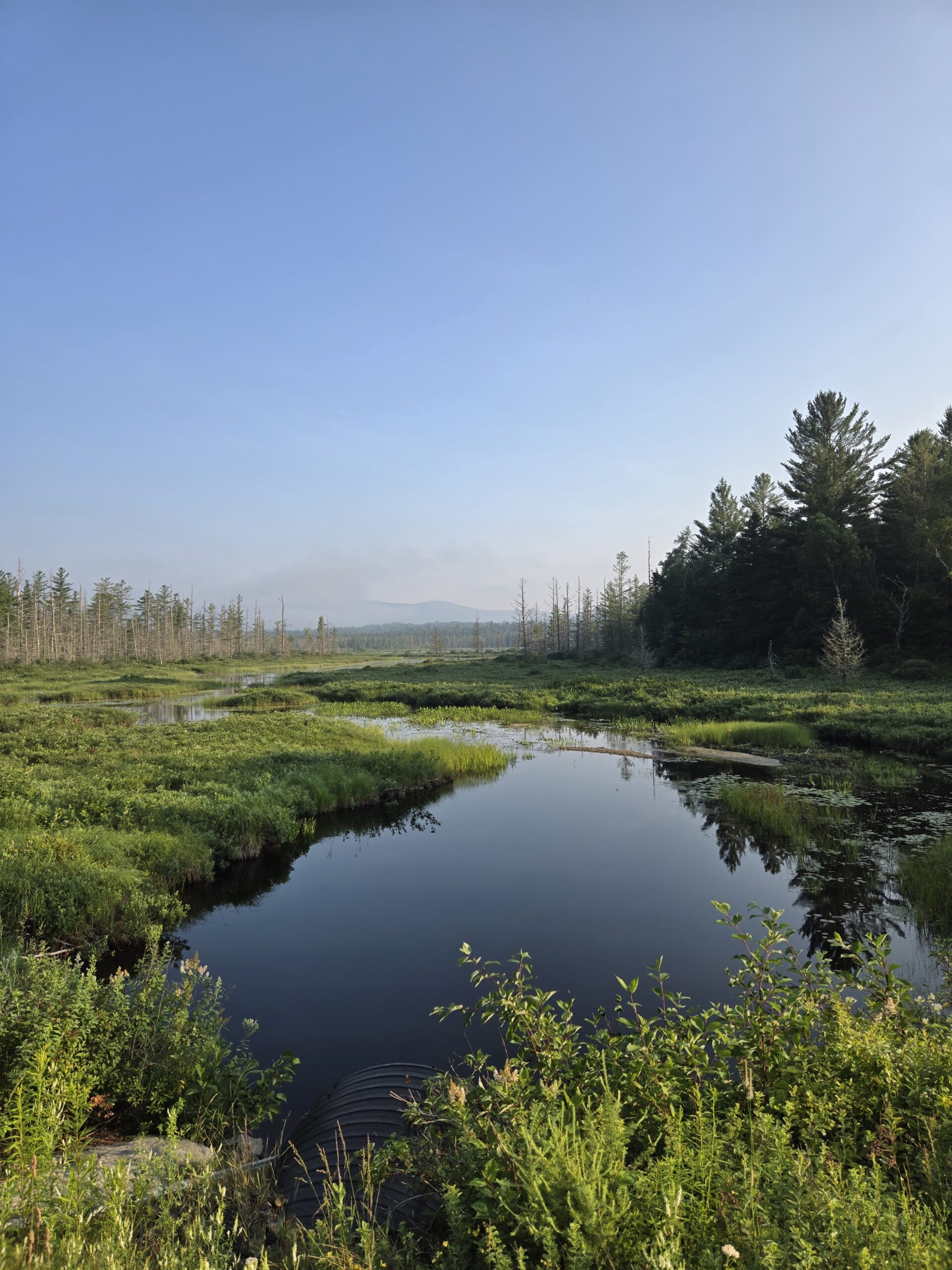
Two days after starting my paddle upstream on the Missisquoi, Lake Champlain was closed due to algal blooms. By Highgate Dam just east of Swanton, water levels were to a trickle. It also became abundantly apparent from the smell of the air and the constant caravan of manure trucks that this entire region of Vermont dairy farms were spreading manure on their fields causing the river to run brown and dangerous levels of pollution. I was strongly advised by locals to not come in contact with the water. I walked across most of Vermont, close to 30 miles per day on the Rail Trails, for several several days to the Canadian border where the water cleared and the locals were aghast that it was not against the law to spread manure on fields.
You cannot skip walking against the current for the 6 miles of Spencer Stream and Little Spencer. The low water and timing meant a slick rocky bottom, enough water to make walking grueling, but not enough to paddle. That day was both the shortest distance and also the most exhausting physically.
It was not until well into New Hampshire that water levels were at levels that allowed me to consistently paddle. Honey Bee and I were both grateful, both of us showing all the more wear and bumps and bruises.
Wind.
I heard the summer of 2025 was one of the windiest on record. I also heard that the most dangerous weather condition for paddlers was high winds. Folks were not shy about sharing concern about crossing Lake Champlain and the possibility of catastrophic and sudden waves. Needless to say, wind was a real concern and it delivered! I had a dedicated routine of checking windy.com for wind forecasts and prepared myself accordingly to mitigate risk as much as possible. But that only can get you so far due to the nature and timing of the trail. You just can’t always get on big water at the ideal time of day.
Like clock work, the wind picked up in late morning for most of the trip. I would get on the water by first light, aiming to put as much distance as possible, but it was not uncommon to find myself with high winds on large bodies of water. I got my first taste of this in the Adirondacks with even small ponds having large chop, like tail winds creating 2 foot waves on Long Lake and Union Falls Pond.
I was able to learn what me and Honey Bee were capable of, but nothing prepared us for the 8 mile paddle from Vale Perkins to Eagle Point campsite on Lake Memphramagog. The decision is a hard one to go or stay. Wind forecasts are only so accurate. Being a novice, I could only trust that I had properly trained, and was properly prepared to self rescue if needed. “I did all the prep. I trained. I tracked the weather. This is my decision that I get to live with. This is my adventure!” became my trope as I found myself amidst 3 plus foot waves on the lake, vacant from other boats save the rescue patrols occasionally passing. Similarly, though with growing confidence, in Maine on Lake Umbagog and Moosehead Lake, strong winds proved even more challenging, threatening to roll me and Honey Bee if we lost focus for a moment.
My challenge, that I can imagine many paddlers have encountered, is the decision to go or not to go. And if you don’t, where do you stay if there are no nearby campsites? And if I choose not to go consistently, how does this impact the trip? Honestly, had I not gone when things were questionable, I may not have finished my trip or taken weeks longer. There was just so much wind! So I learned what my capacity was and how to manage the best I could, and truly enjoy moments of still open water.
Did you have any encounters with wildlife?
After a grueling day of walking upstream on Little Spencer, I was exhausted but elated to finally be on paddleable water. As I came around the bend, a moose grazed in the shallows less than 50 feet away. I gave as wide a berth as possible, but I could only get so far. I paddled as silently and quickly as possible along the opposite shore, laser attention on the moose. Just as I was directly across from the moose, I heard crashing in the woods immediately to the shore aside me to see a second moose retreating into the forest. I was surrounded!! I paddled my little heart out until I got some distance between me and the moose gauntlet. I turned back to see them calmly munching away.
River otters are industrious and omnipresent creatures along the trail. I witnessed them eat, diving, playing, grooming and even building stone patios outside their dens. I knew these cute little guys had a fierce reputation, but it was not until I saw a single otter wrestling a turtle larger than itself that I knew the reputation was legit. I watched in awe. It wrestled until the turtle no longer fought, a matter of seconds. It then turned its attention to me, thrust its upper body out the water and started barking at me while staring me down. That’s a lot of guts, little guy!
Seeing bald eagles became so common that a day without them seemed like something was missing. Along the Penobscot in Maine I was privileged to see a pair of bald eagles, seemingly a male and female couple, in a snag along the edge of the river.
With the abundant wildlife visible around, it was cool hearing bucks snorting during mating season. I first experienced this at the mouth of the Rapid River and then later throughout my time in Maine.
Did you have a favorite section or community?
The waters of the Adirondacks have become my home turf. With the amazing St Regis Outfitters crew who have become friends, and their wealth of knowledge, It’s hard not to feel prejudiced to this amazing, warm and gorgeous part of the trail with robust paddling culture and support.
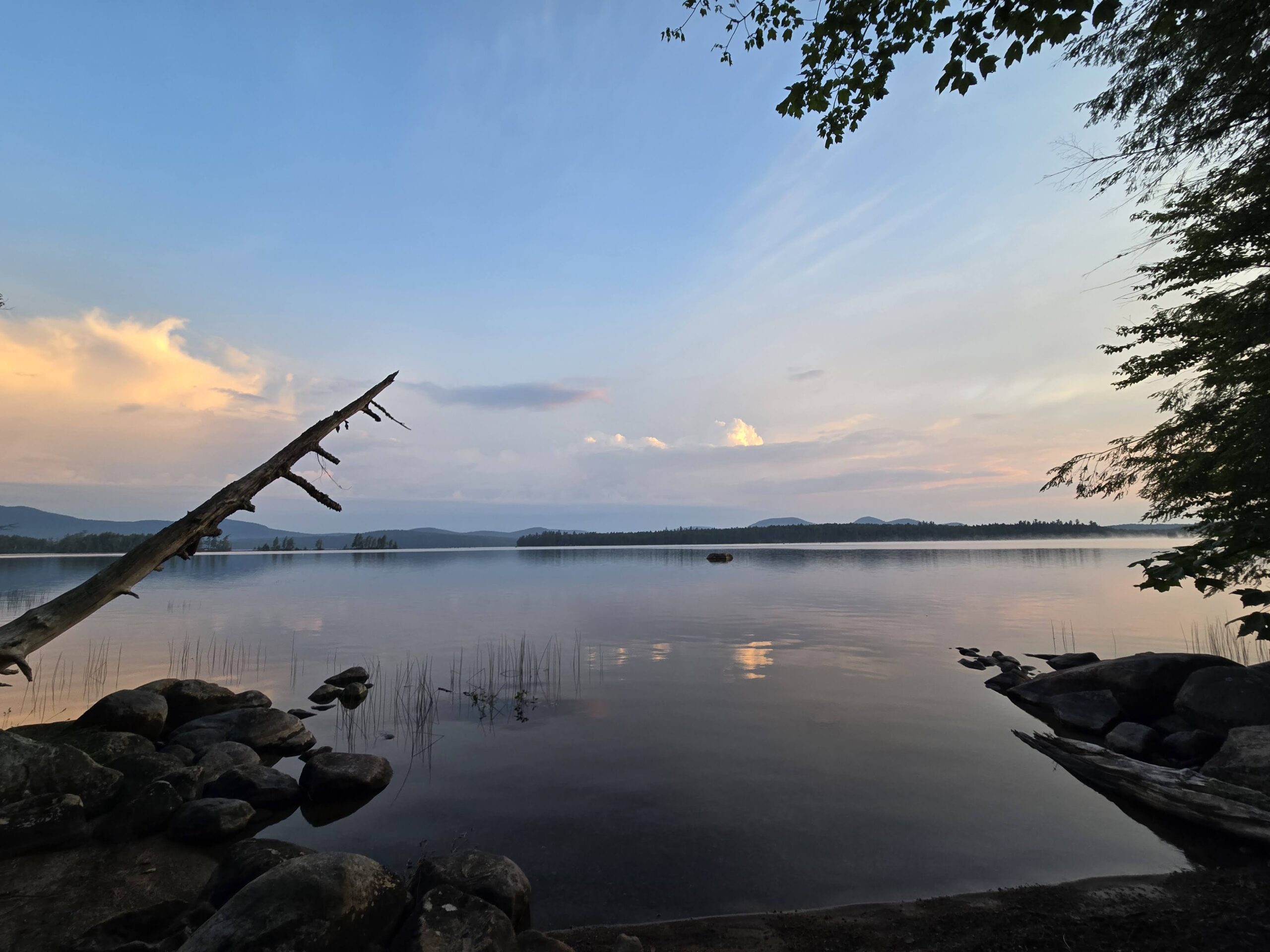
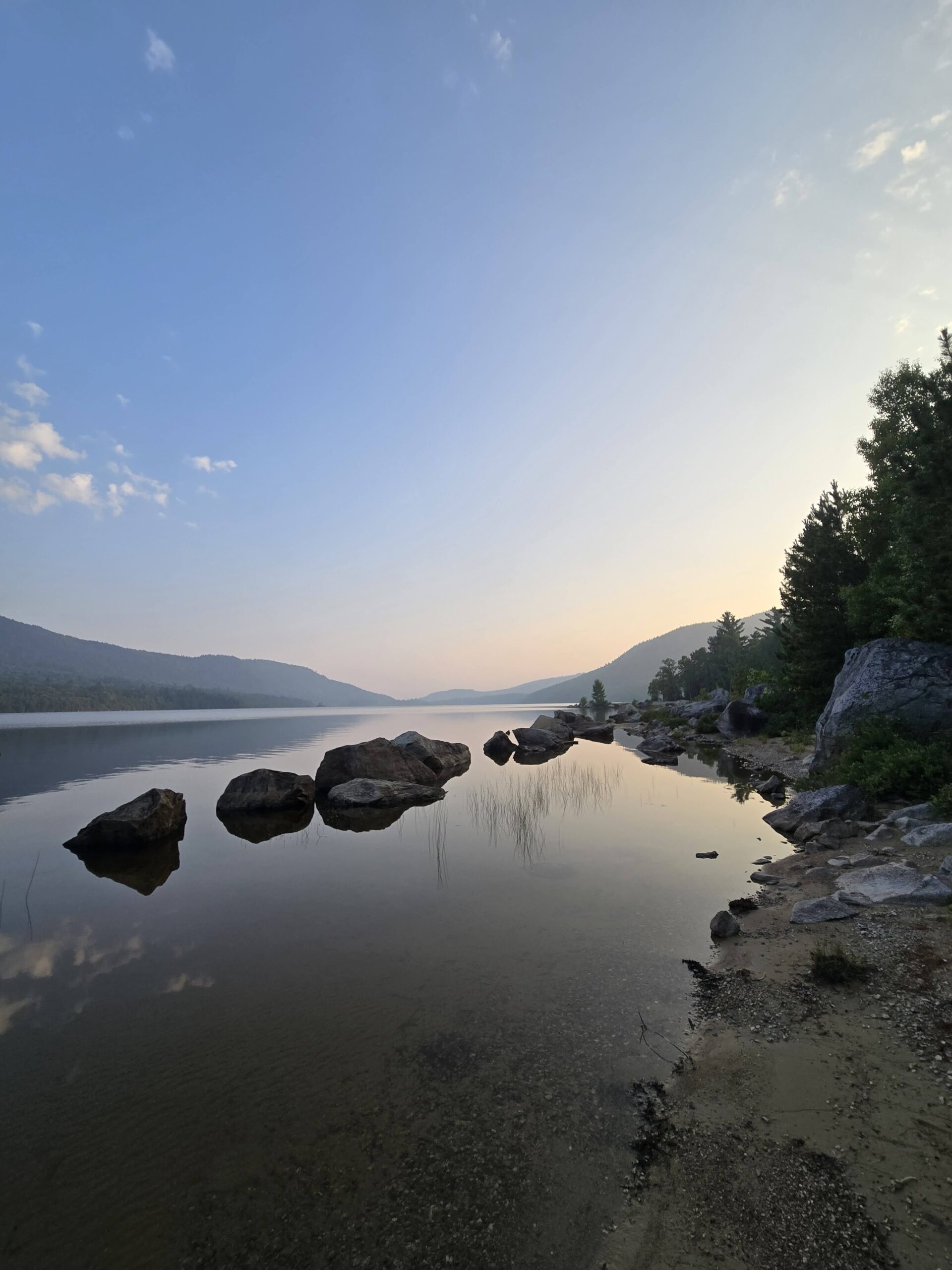
Maine just has a different feel. This composes approximately half of the trip and really stands out. Maine takes its outdoors seriously and the campsites are testament to that, each with at least one table, awesome outhouses, and great abundant sites. It’s hard to choose one section in Maine. The Allagash is famous for a reason, but it was so busy it felt more like a park than the wilderness experience I was expecting. I LOVED two sections in particular. Mooselookmeguntuk to Flagstaff to Spencer Lake were abundant with extraordinary, other worldly beauty and also incredible generosity from local folks, offering everything from advice on the trail to, having lunch together, to a place to stay the night and hot shower. By Mooselookmeguntuk I was in a groove on my trip and routine and from here on out was able to set up my hammock in the afternoons for a nap after a day of paddling. Stratton and Rangely welcome and cater to thru paddlers and hikers with the convergence of the Appalachian Trail and the NFCT. The exquisite view of the Bigelow Range during much of the paddle is hypnotizing. To boot, the campsites on Flagstaff are unique and beautiful. Spencer Lake in particular is like no other place. Super remote, flanked by mountains, and the strewn boulders and sandy beaches make it stand out as from another planet. And to top it off, the caretakers brought me firewood, mended my clothes, and charged my electronics for me, all delivered by boat to my campsite.
The other part of Maine I loved was Little Brassua Lake to Moosehead Lake. Little Brassua is SO remote with no boat access and only a couple of campsites. At the mouth of the Moose River, it’s challenging to get to. Moosehead Lake on the other hand is a popular lake but stunningly beautiful with Mount Kineo visible for nearly the entire paddle and the Katadhin Range in the distance. This was the
What was your rig? What gear did you find useful and what would you leave at home if you ever thru-paddle again?
I oriented towards keeping things lightweight, carrying no more than 50 pounds of gear and food for 5-7 days at a time. My food all fit in a BearVault BV500 to help speed up camp setup and breakdown. And trust me, I ate very well with dehydrated meals prepared by my chefy friends! I tend to be very detail oriented so I have extensive notes on gear, itinerary and supply drops that I’d be happy to share and/or talk about as a resource.
Northstar Northwind Solo — blacklite layup with carbon gunwales
Affectionately named Honey Bee. 🙂 I wouldn’t typically have such a high end boat, but it’s what I could find before my trip that met my specs. I loved the lightweight for sure, especially with all the portaging I did. The design of the boat is fantastic! If I made changes, I’d have preferred aluminum gunwales for more rigidity and flexibility of mounting gear. Were I to do it again, I would seriously consider the same boat in a IXP layup so I wouldn’t lose sleep about rapids and low water. Not that I’m going to go buy another boat, but just saying.
Fox Werx Roka — single straight blade paddle
At 15 ounces and a sweet handmade wood handle, this was amazing. And stood up to being battered in rapids and low water and felt awesome in hand.
Humangear BidetToob Portable Bidet
Don’t get me started with how life changing and amazing this piece of gear is. I did not use a single square of toilet paper and had clean hands and a clean ass the whole trip. Stop messing around with the hassle and mess of toilet paper. Seriously amazing!
Spring Creek portage cart — modified with 14” solid tires
I obsessively researched portage carts and landed on this for being the most lightweight, durable cart. I not only put almost 200 miles on this, but portaged through pretty much all “non-wheelable” portages without bottoming out once, including clearing large boulders. Seriously, I took this through forests and paved roads alike and it held up perfectly. I bought a kit of repair hardware that I did not use once.
I ordered this with the 11” solid wheels and replaced them with 14″ solid wheels of same brand that I ordered directly from the wheel manufacturer. While the manufacturer specs say the axle width is the same, it is off by about 1/4” so requires swapping out some minor hardware that can be found at a local hardware store. Make sure to use hardened steel for replacement hardware. The upsized wheels add approximately 1.5 pounds for a total of about 12 pounds (approximately ⅔ the weight of the comparable Suspenz steel frame system). I am happy to share details as desired.
Red Leaf Designs — accessories
These guys are awesome! They are a small, handmade, operation that obsessively designs gear by and for paddlers. They are awesome to deal with and very affordable.
Large gunwale bags were my go to for on the water and quick access items on one side, and safety gear on the other side.
I also installed 3 ultralight daisy chains each in the forward and aft for lashing gear.
They also made me a spray deck to fit my specific boat (though the drought meant I never used it.).
Sea to summit clear waterproof map case
I sized this lightweight case to the NFCT maps and mounted it to the thwart and gunwales in front of me for easy viewing. This meant I never had to fuss with a map and always had it in front of me. I would input notes directly on the map from the guidebook and Farout guide, as well as mileages, so I could use this as my living notebook during the days.
What would you tell someone who is considering a thru-paddle?
Go solo or go tandem, but know why you are choosing. Don’t go tandem out of fear of being solo. And similarly, don’t go solo if it’s beyond your mental or physical capacity.
Go early in the season to avoid low water, or if you go later, don’t be afraid to walk, and enjoy the walk. It’s all beautiful and part of the journey.
Identify what risk you are comfortable with. This can change, but paddling is awesome and dangerous, especially when solo. Risk mitigation is critical and matching your skills and preparedness to what you expose yourself to.
Surrender. Mother nature is amazing and in charge. Learn to listen to the water. Pay attention to the winds and weather. Trust your intuition and capacity.
Have a plan and then be flexible because it definitely will change.
This is what you are doing. This is your life. There is no comfy bed or hot meal to return to. Sink in and enjoy.
Discipline for daily routine. So much is unknown and out of your control along the course of the day. Your routine and discipline creates the container and possibility for being present to how awesome this trip is. I’d recommend doing as much at night as possible to ease camp breakdown in the morning.
Let yourself be open to receiving unconditional generosity in the form of trail magic, from strangers, from nature and from this community of paddlers. People along the entire trip will offer you support. More concretely, be prepared with what you need. I know it sounds silly, but it’s easy to forget in the midst of a challenging day and meeting a stranger. For me, my core request when asked if I needed anything was: offloading garbage, charging electronics, advice on upcoming water conditions, fresh fruit or vegetable snack. Lots of people offer water, but with a proper filtration system and water management that almost never was a need.
Connect with the NFCT and paddling community. There is great support out there, especially for a novice paddler like myself. Talk to thru paddlers, especially ones who may have had overlapping trip characteristics, solo versus tandem, time of season, speed, fitness and age. I found having a fellow paddler’s sample itinerary was a great resource for trip planning.
Skill up! If you are not already skilled, get trained on solo paddling technique, running whitewater, and self-rescue. These were critical pieces of skill building that gave confidence throughout the trip and helped me make decisions for scenarios I had never encountered before.
Be fit in mind and body. Physically train. Also know your demons and expect them to rear their heads. Have tools to be in a tender conversation with yourself.
Returning home was disorienting. Needed to honor this big transition. This new relationship with myself. I did a lot of healing out there. Reconciliation with my past self. With a big giant smile on my face every moment, be it paddling, walking on the road, dragging my boat thru thigh deep mud, chasing a red squirrel away from my breakfast. This was the opportunity to be totally present with the waters and myself. It was the closure I needed.