We recently caught up with another thru-paddler from 2025, Justin Reich! We’re grateful to Justin for taking the time to answer some questions and share his experience paddling the Northern Forest Canoe Trail from end to end. Read on and enjoy!
Name: Justin Reich
Age: 48
Location: Arlington, Massachusetts
Dates of trip: May 11 to June 12, 33 days, three rest days
Overall, what was your experience like paddling the NFCT from end-to-end?
Magical. Since I was 10, I’ve spent big chunks of my summers paddling the waters of the north woods of Maine, and recently I’ve spent more time exploring the Adirondacks, Vermont and New Hampshire. Most of my month on the trail was revisiting and connecting places that I’ve traveled by canoe, bike or car. After nearly four decades of camping and canoeing around New England, I’m quite comfortable travelling outdoors. There were some challenges along the way, but overwhelmingly I just got to enjoy being outside in places I love.
What were the best moments for you? What were the biggest challenges you faced?
Some of my favorite moments and most challenging moments were intertwined.
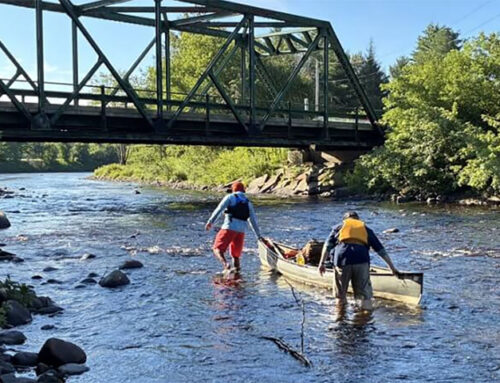
I left Newport, Vermont, to start going up the Clyde River, and snapped together my handmade, two-piece, 12′ aluminum pole to start trying to pole up-river. It was some of the biggest water that I had yet tried to pole up, and I got pushed back multiple times. A fisherman was watching me fail for a bit, and he got up and walked away, presumably in embarrassment for me. I kept heading up the river and eventually just put the pole away and started dragging the boat upstream.
At one point — perhaps the biggest mistake and most dangerous moment on the trip — I pulled the boat out to portage around a rapid, put it back in too early, and got the boat pinned between a tree on the shore and a rock downstream. I eventually got in the water, lifted the pinned bow, released the stern from the tree, floated down a rapid, pulled the boat ashore, and portaged up the shore again — this time putting in well above the hazard. There was another mile or so of hard upstream walking ahead of that, with no real option to portage or carry around. When I saw the portage trail to go up to the Yaledale campsite, the river was running so big I didn’t even feel like I could portage or ferry across, so I kept going even further upstream until I found a safer place to cross.
I hauled everything up to Alex’s Lean-to at the Yaledale campsite, and looked at the log while I was on break. Only a handful of people had ever signed in, making me realize just how challenging this kind of long distance, upstream travelling was. One thru-paddler wrote something like, “We left a piece of our soul in the Clyde River,” and I just laughed, and laughed, and laughed. I felt so seen, as the kids say. I, too, had just left a piece of my soul in the Clyde, and how wonderful it was to be holding this register with someone who had found just the right words to describe how I felt.
That 12′ pole is connected to some of my fondest memories on the trip. While I came to the NFCT as a fairly proficient downstream paddler, I was relatively new to poling and learned a lot. I have some hard memories about learning; I poled in very cold weather right before a Nor’easter up the Clyde towards Island Pond. I travelled very slowly that cold, windy day.
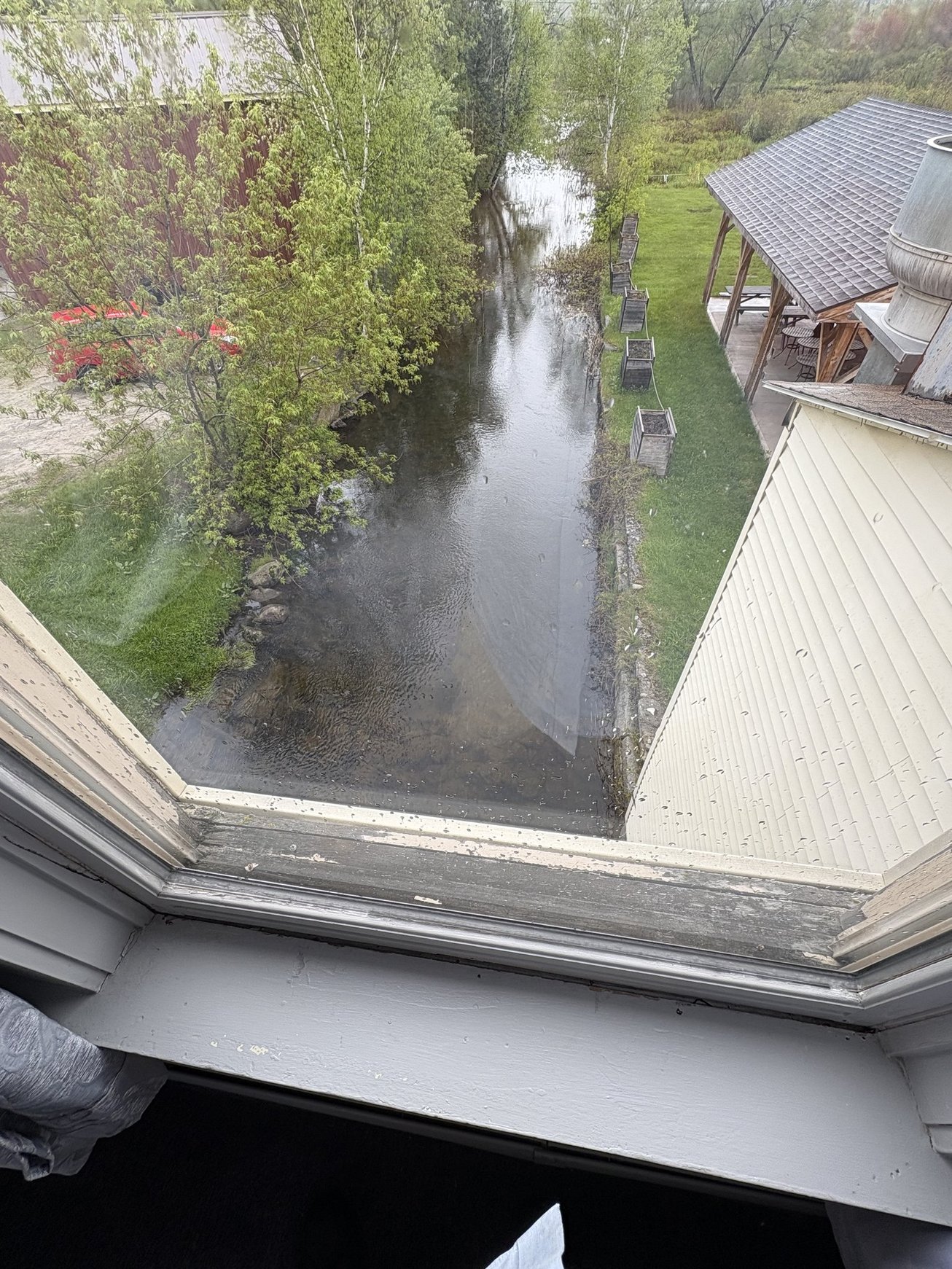
But as a reward, I was assigned to a very special room in the Essex House and Tavern in Island Pond (I think room 6). The Essex is built over the canal that feeds Island Pond into the Clyde, so the hotel is built over the NFCT, and that night I slept directly above the river.
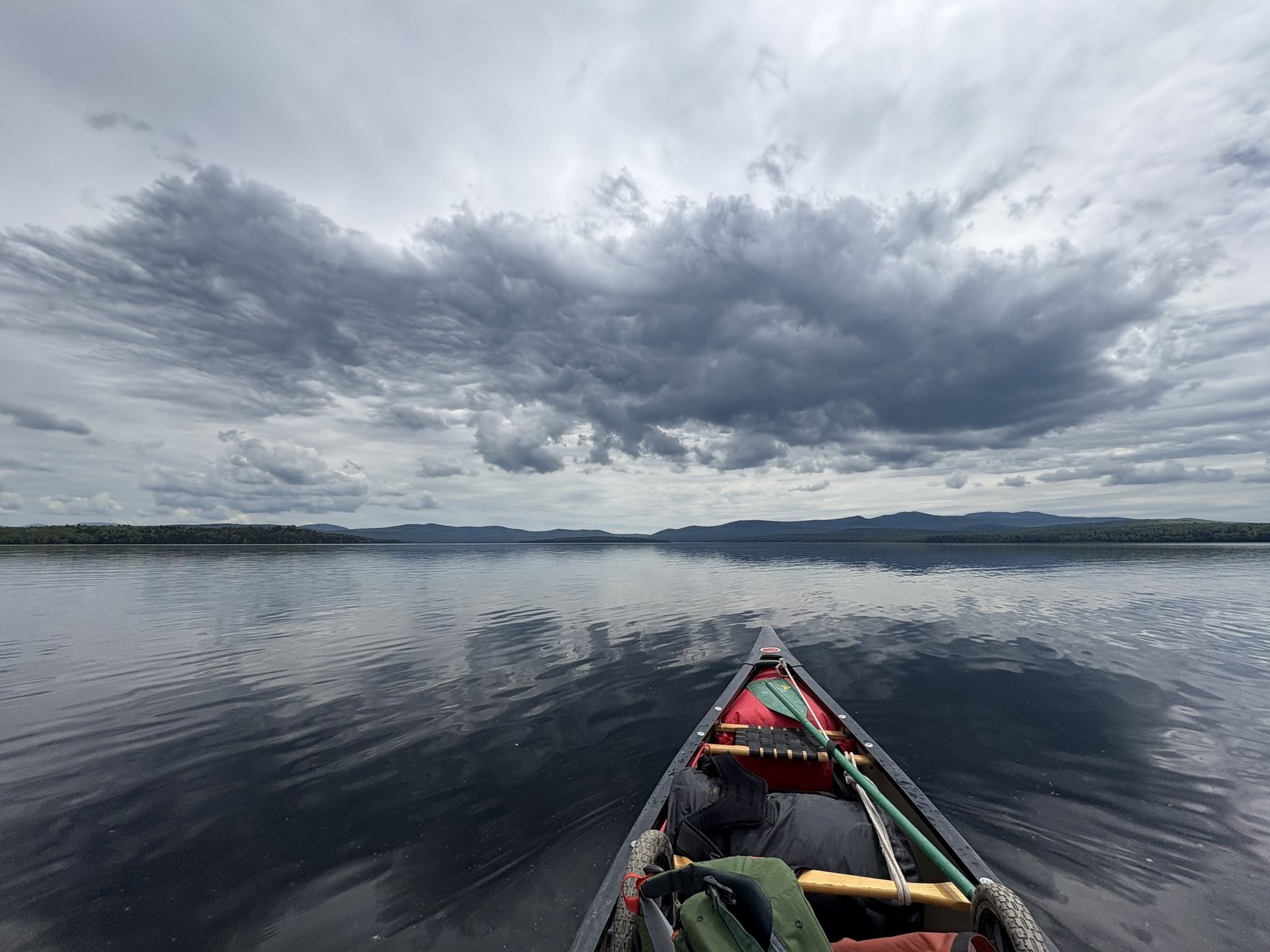
The pole split into two pieces, and I discovered that I could lash them to each side of a thwart to create a pair of masts, and then rig a tarp as a sail in-between them. Doing this, I could go very, very fast. I did this wherever I could on the trip, from Long Lake in the Adirondacks to the last stretches of the St. John River in Fort Kent. But my fastest sail was across Flagstaff Lake with a ripping west wind hurling me across the lake. Usually sailing is pretty fun, but that was both fun and terrifying, with swell coming up to the gunnels. Getting good at rigging and solo sailing the boat was among the most satisfying parts of the trip.
I recorded two podcast episodes about portaging and canoe sailing.
Did you have any encounters with wildlife?
When I was a boy and young man, I spent my summers at Camp Chewonki on the coast of Maine, and we’d travel up to the north woods to hike and canoe. It was very special to see a bald eagle in those days, as their populations had been devastated by DDT. But in 2025, I saw dozens of bald eagles. I saw them every single day in New York, and one day on the Saranac I saw eight in one spot; I didn’t even know they ever traveled or rested in colonies like that. There are many, many reasons to be deeply concerned about the health of living things on the planet, but bald eagles give me hope that we can rectify some of our mistakes.
I saw an insane beaver at Great Falls swimming in circles and slapping his tail like a mad lad.
I saw several river otters; they have these very distinctive faces that look like angry old men. I surprised one of them, and he ducked down and swam a bit, and popped back up. But I was also floating down stream, so I was still next to him. He furrowed his brow a bit, and dived again. He popped back up next to me. Still no luck! He scrunched up his angry face, dived down, and I never saw him again.
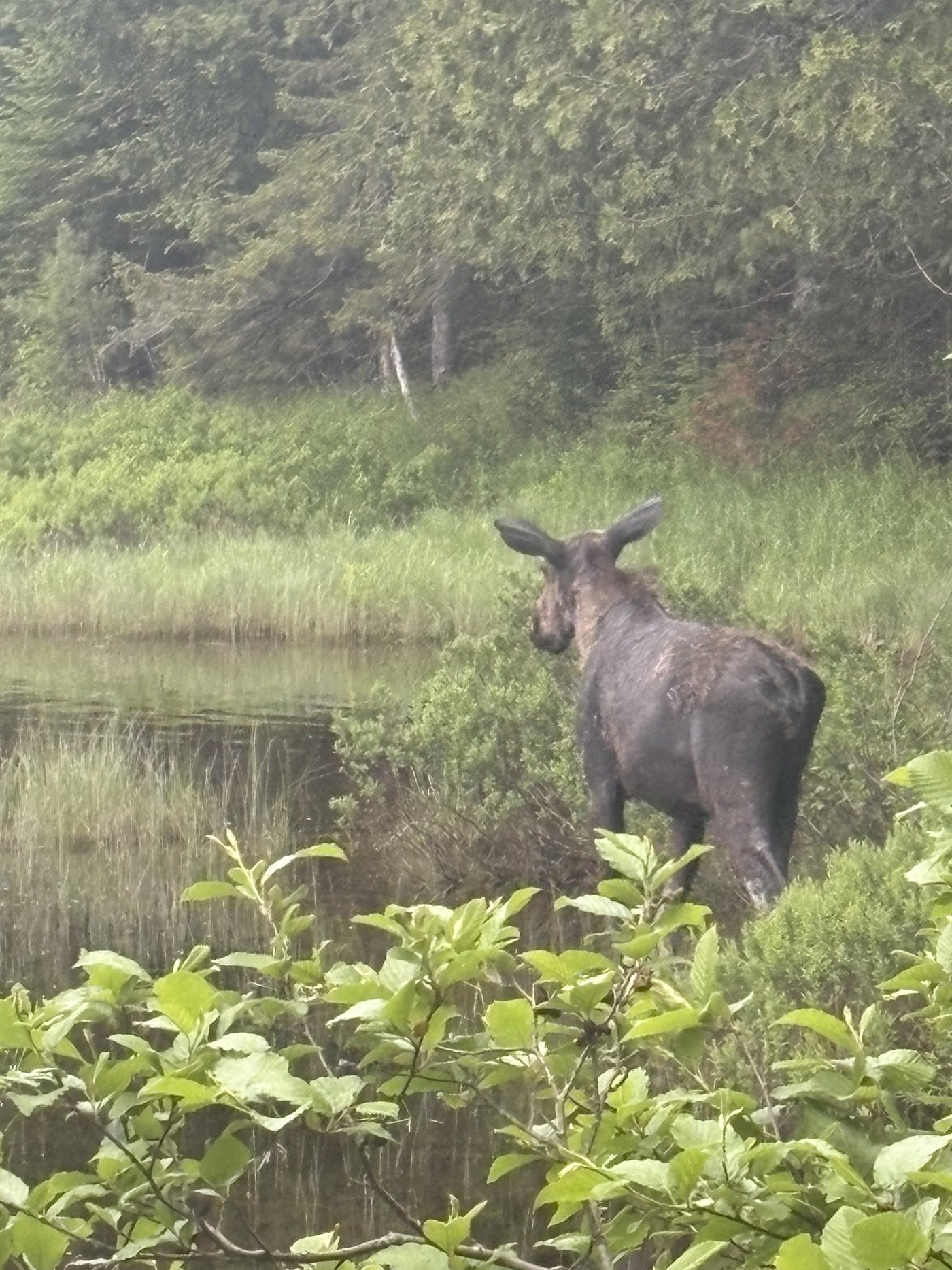
On Fish Pond I saw a mama moose with a days-old baby moose walking around the fens.
On Cunliffe Island, I was watching the water after dinner, leaning against a tree. I heard a rustle and a moose walked right from a neighboring island onto my island, right, right in front of me.
Did you have a favorite section or community?
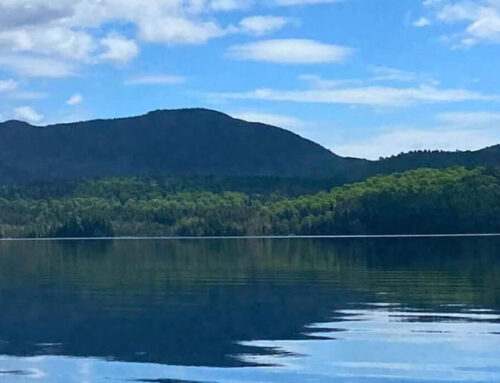
I had not canoed on Allagash Lake before. I think I had been there about 25 years ago bringing a resupply to another group, but I didn’t get in the water myself. In 700 miles of beautiful places, Allagash Lake, Allagash Mountain and Allagash Stream were the most beautiful places I visited: serene and sublime. It’s everything that’s beautiful and wonderful about paddling the North Maine Woods, but just a little more beautiful and wonderful. The view from Allagash Mountain is an incredible way to look back on many miles of the NFCT; I caught a glimpse of Mount Kineo down in Moosehead on the horizon. Everyone doing the whole trail should seriously consider fighting up the Caucomgomoc to get up to Allagash Lake.
It’s very remote there. When I stopped in Chensuncook — one of the very most isolated communities in the lower 48 — I asked about conditions and campsites headed towards Black Pond (by this point, I refused to camp anywhere without a picnic table; a picnic table is de rigueur), and one of the locals said something like “Plenty of moose; no one ever goes up there.” When people in Chensuncook tell you that a place is quiet and remote, it is really, really quiet and remote.
What was your rig? What gear did you find useful and what would you leave at home if you ever thru-paddle again?
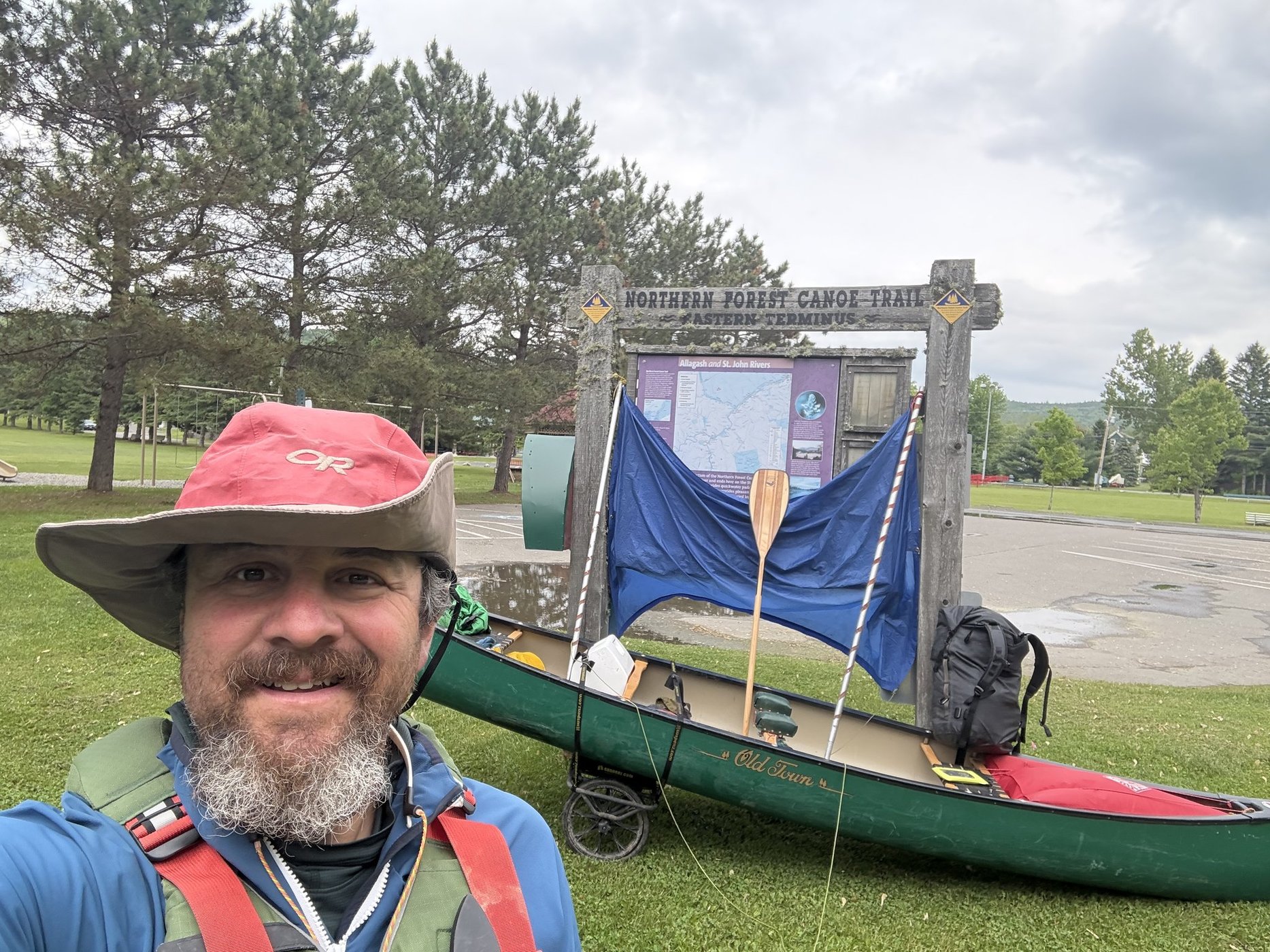
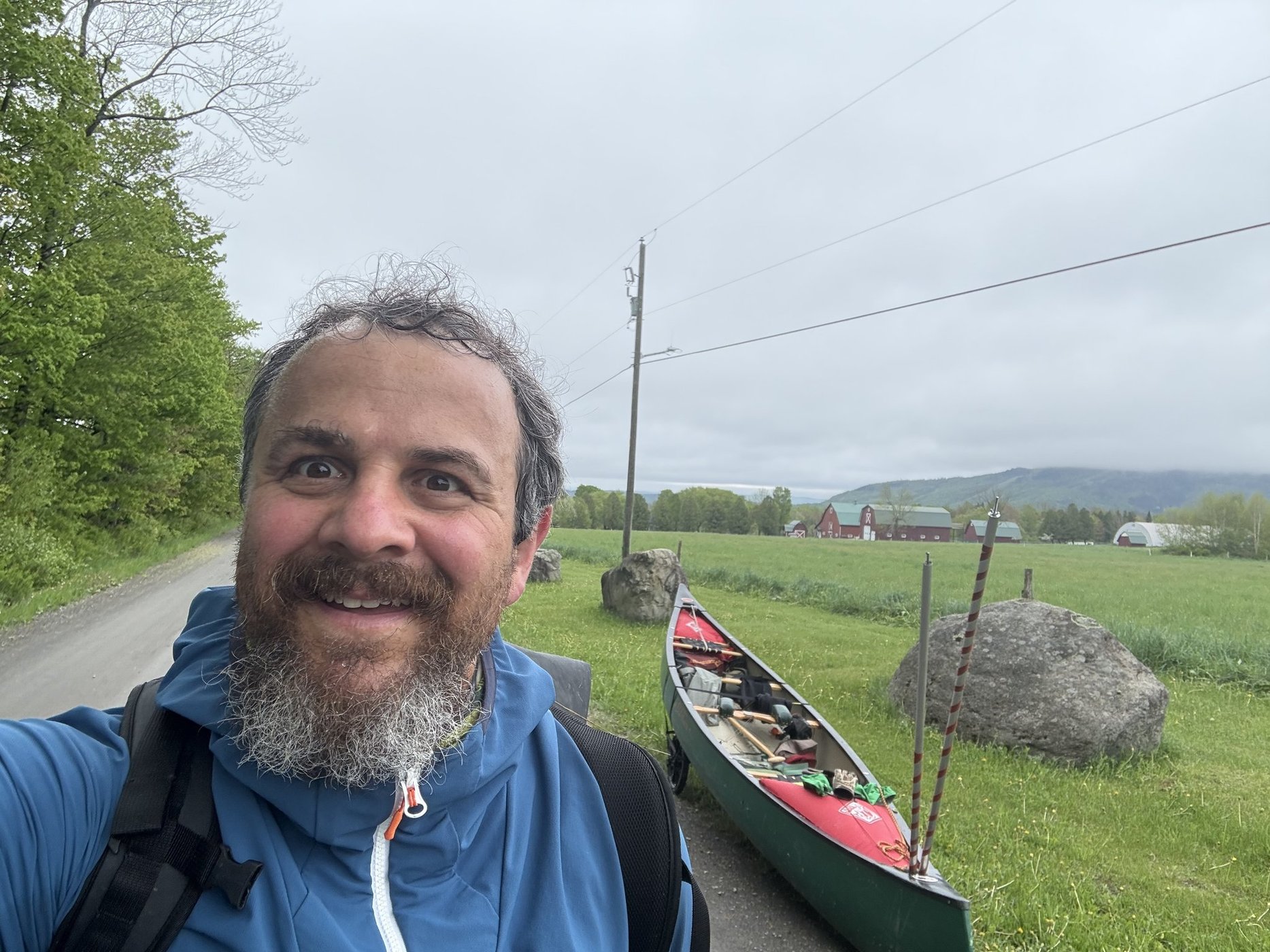
The best boat for the NFCT is the one you have, and I had a 2013 Old Town Camper in Royalex. It is a two-person boat, and I paddled it as a solo traveler, in the bow, facing backwards towards the stern.
The obvious downside of rolling with a big boat like that is portaging, but with a Suspenz All Terrain Airless portage cart, it was straightforward to roll along anywhere with wheels. Basically, you put all the stuff in the bow, put the cart in the middle, and push the canoe like a big, long wheelbarrow. It was a big boat for the handful of “not wheelable” portages. (Quick plug for Suspenz customer service. I had a wheel issue, and when I called for support, I got a very knowledgeable technician very quickly, who ultimately sent me a new set of wheels).
But, size and weight came with several advantages. The Royalex is durable enough to run all the Class 3 downstream sections on the whole trip. I lined a few key spots on the Saranac and some other places, but I paddled down nearly every mile of water that could be run by an open boat on the trail.
I was also large enough to stand up very comfortably for long miles of portaging, and the wide middle was helpful in rigging up a sail with a good area. If I wanted to have lunch in the boat, there was plenty of room to rotate around, make sandwiches on the bags or cooler, etc. I’m sure lighter boats could go a lot faster on flatwater, but when I had wind, upstream current or downstream rapid then a sturdy boat came in handy.
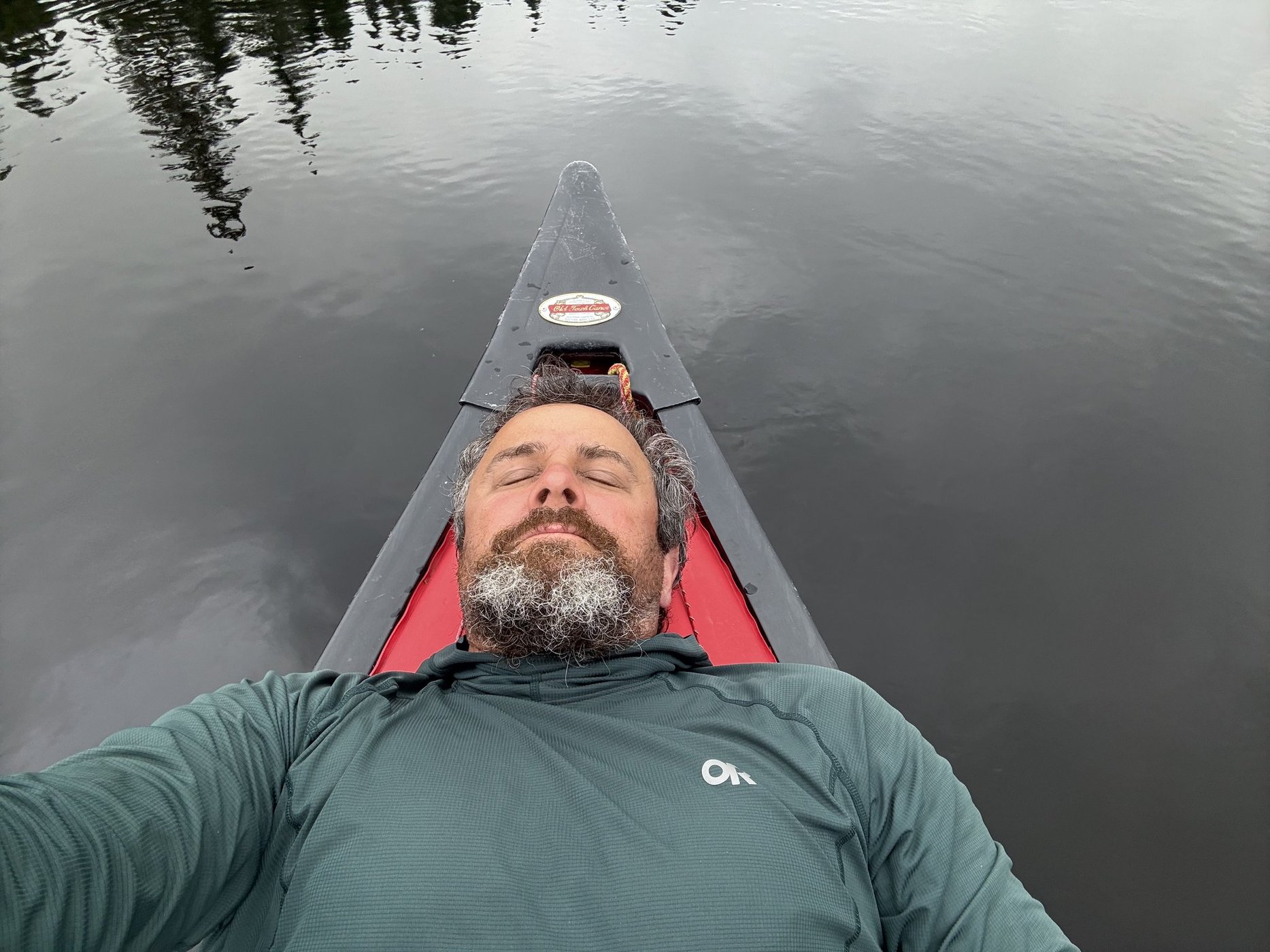
Finally, I had a big inflatable piece of floatation that filled up the bow behind me, which meant I could lay back and get a little nap in the big boat any time.
In terms of gear, I’d advocate for one piece not always mentioned in gear lists: I recommend hip/waist high waders. These are basically waterproof rain pants with integrated boots, so you can get into ~3 feet of water and your legs and feet stay dry (or at least, they get wet from sweat, not river water). On cold days, it’s no fun to paddle all day with wet feet, and trying to get into boats without getting your feet wet is asking for a flip. Canoeing is a wet-footed sport.
I’m older, and no longer bounce, so small falls and twists were the most likely trip-ending injury that I might face. As a result, I was pretty diligent about footwear. I pretty much always wore booties with good grippable soles on the water, and I tried to always switch over to stiffer ankle high hiking boots for portages for good support. Without waders, you have to decide whether you want to keep wet and dry socks, or just let your socks get wet, or whatever. But with waders, you just swap your shoes around and your feet stay dry. Especially for May and early June starts, I think the waders are very valuable. I used the Kokatat Hydrus Dry pant. They are pricey, but if they rip, Kokatat will repair them very cheaply.
What would you tell someone who is considering a thru-paddle?
Get a pole, and put away your phone.
I have only one beef with the excellent guidebook from NFCT, which is that the author is lukewarm on poles and poling. A two-piece aluminum pole is outstanding. You can’t buy them anywhere, so you’ll have to make one, but look online for guides or message me and we’ll talk. You’ll pole upstream, you’ll sail with the pole as a mast, you’ll put up your tarp at night with a pole. Yes to poles.
But no to phones.
Buy all of the printed maps from NFCT. Practice paddling for a bit navigating only using the maps. This will be mostly straightforward, but the NFCT ran out of money before they got to hire someone to put islands on the map, so the islands are very random. Some are there, some are not. This will confuse you greatly until you realize not to trust the islands. (When it says, “Not to be used as a sole navigational aide” on the map, it’s because of the islands. And because Little Spencer Stream bears no resemblance at all to whatever they put on the printed map.)
Buy or borrow a camera.
You have your maps, you have your camera, now put your phone away. Keep it in a waterproof case, and do everything you can to keep your phone away all day. Don’t listen to music or audio books, and if you must get an old iPod.
You’ll need to cheat a bit to double check the maps on FarOut or to book a hotel room, but do everything you can to spend as much of every day as possible with as few electronic communications as possible.
Be present on the river.